
Our Curriculum
We teach an authentic and comprehensive system of Japanese swordsmanship that is unique in its depth and realism, with an emphasis on both the physical and mental development of the practitioner.
"On the first day of training, sword and human meet as alien objects; over time they become one living thing. Eventually, the blade will magnify and project the actions of the body, reflect mood and mindset, and ultimately
point the way to the core of being."
From Kurikara: The Sword and the Serpent
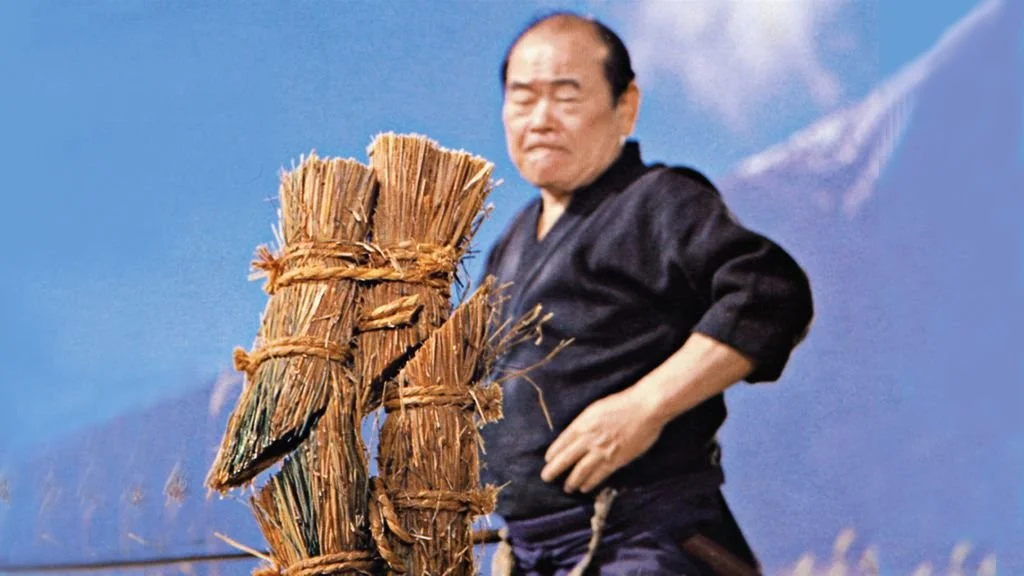
Toyama Ryu & Nakamura Ryu Battodo
戸山流 • 中村流 抜刀道
“Viewed by a foreigner the cutting power of the Japanese sword may indeed make it appear a frightening weapon, but to us Japanese it is an object of reverence to the point of being a vessel for the divine… The Japanese sword exists for the purpose of cutting but it does not exist only to cut. In short, the Japanese sword exists to perfect the heart and mind of its wielder through spiritual training, and it is taught that the sword that gives and enhances life must not become the sword that takes it.”
— Nakamura Taizaburo, The Spirit of the Sword
Nakamura Taizaburo was one of the most celebrated martial artists of Japan in the 20th century. As a master of multiple disciplines he played a major role in disseminating Toyama Ryu. A combat veteran, he was familiar with the horrific realities of life or death confrontation and believed strongly that, in contrast to its fearsome capabilities, the Japanese sword was an ideal tool for deep personal development. He created Nakamura Ryu in 1952 to formalize his approach to swordsmanship.
The apparent simplicity of the kata and techniques of Toyama Ryu and Nakamura Ryu belies their depth. Designed to be effective under the stress of real combat, they are a laboratory for the development of truly spontaneous swordsmanship — a state of ultimate freedom and capability that Nakamura sensei called jiyu jizai (自由自在). Working towards this capability requires persistence and a systematic approach to physical and mental cultivation.
Kurikara Ryu Heiho
倶利伽羅龍兵法
“Every time you stand up with your sword in hand to train, you must be aware of the state of your vital energy and your body so that you can be quite relaxed and put yourself in a water-like state by melting the ice. In this way the body will become completely free.”
— Miyamoto Musashi, Hyoho Shin Ki Tai Oboe Gaki
Kurikara Ryu Heiho is a complete system of internal and external development that uses the sword as a martial tool to explore the connections between mind and body and gradually dissolve patterns and blockages that prevent natural and spontaneous action.
Training in Kurikara Ryu is systematic and based on personal transmission, reflecting its roots in Shugendo (修験道 / lit. “the way of testing and training”). The Kurikara Ryu includes a system of conditioning called Tanden-Tanren (丹田鍛錬 / forging of the core), which develops the necessary physical capabilities and mental attitude to begin to explore the mind-body connections that are integral in deeper practices.
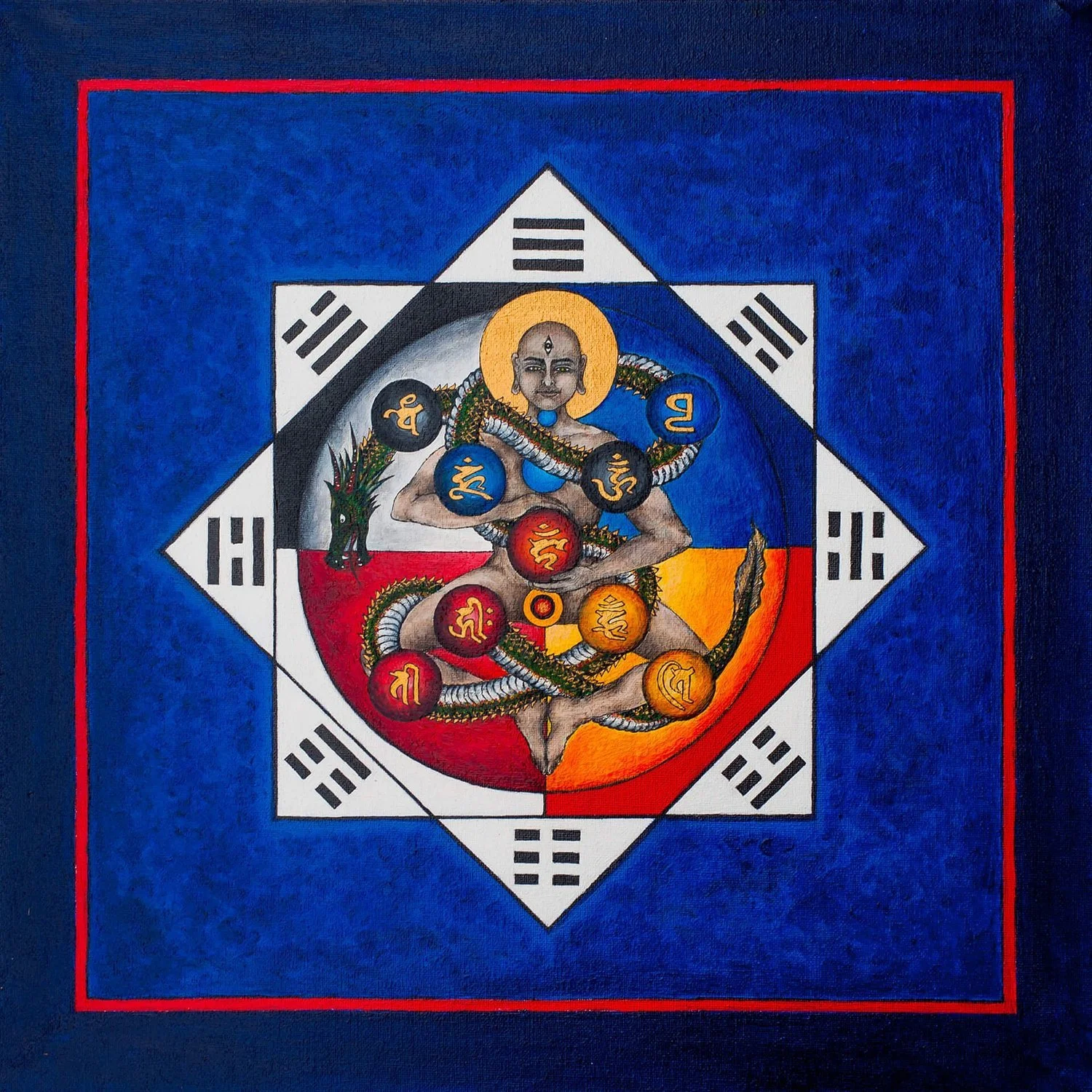
The progressive curriculum is governed by a mandala, which is like a map that illustrates functional relationships between the inner world of the practitioner, the outer world, and the energetic currents that connect them. The progression of the swordsman in Kurikara Ryu follows the “Five Great Elements” (五大) of earth, water, fire, air, and void. A kata for each element forms the foundation of the school. When the qualities of each element are in balance, one can see and act with complete equanimity and freedom.
形
KATA
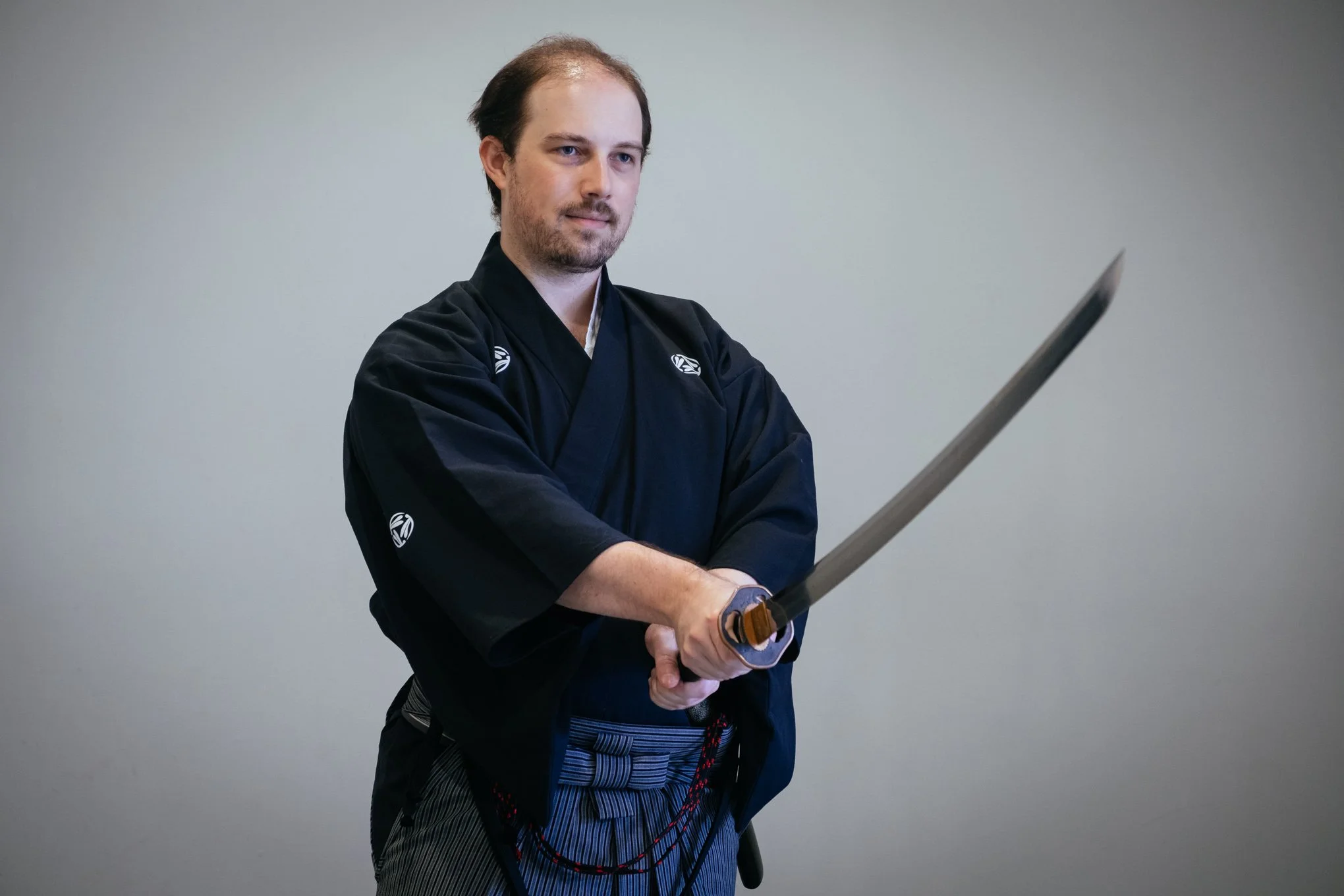
Kata are prescribed forms that contain the vocabulary of swordsmanship. We teach the kata of Toyama Ryu, Nakamura Ryu, Kurikara Ryu Heiho, and the US Federation of Battodo.
Taken together our kata offer a laboratory that develops integrated body movement.
試し斬り
TAMESHIGIRI
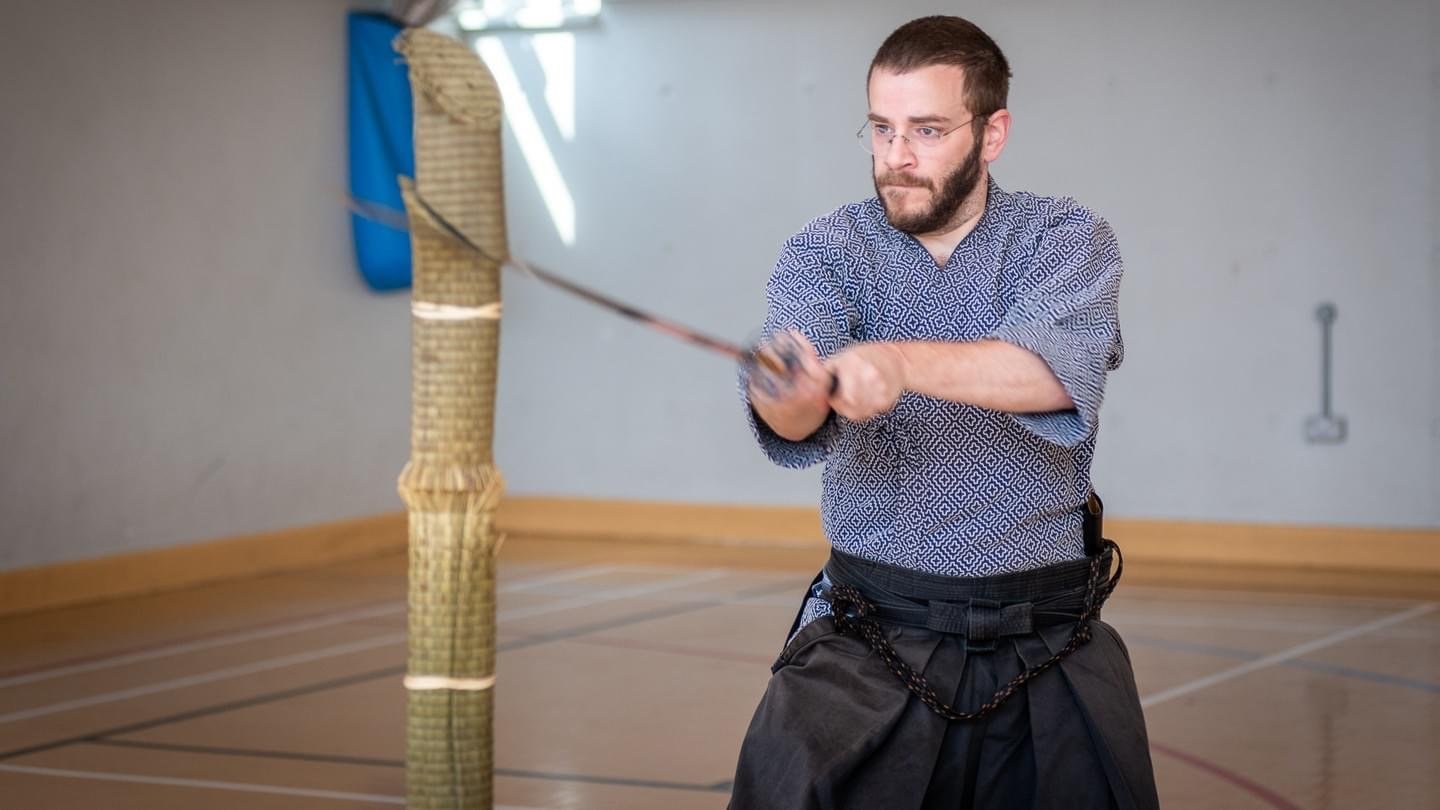
To test our technique and composure, we cut tatami mats that have been soaked in water. This traditional practice teaches poise, targeting, angle, proper grip, and power generation.
Advanced practices include spontaneous cutting working with multiple targets and footwork.
組太⼑
KUMITACHI
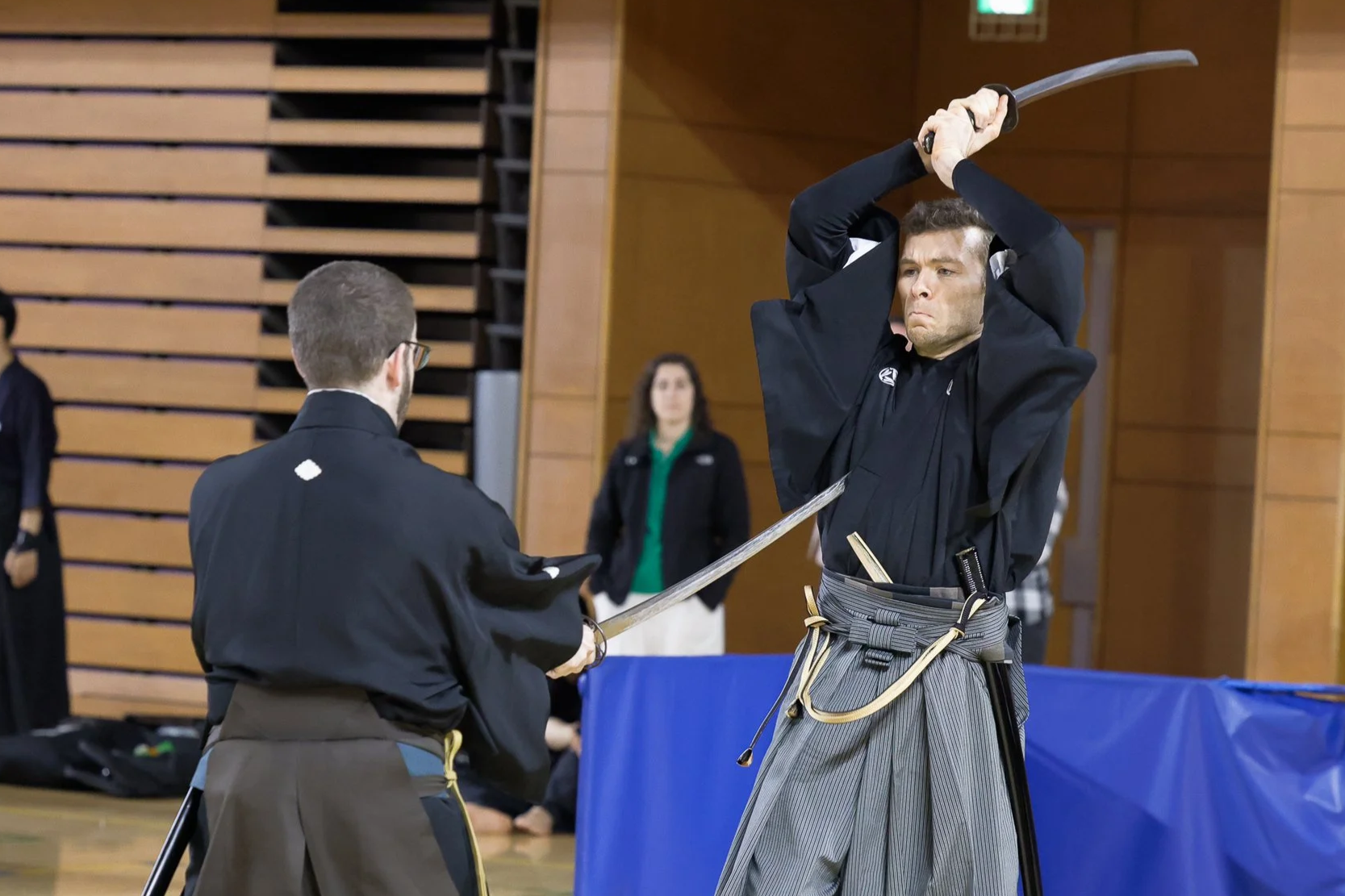
Kumitachi includes a full range of partner forms, paired exercises, and sparring. These practices contain some of the most advanced elements of our curriculum.
The ultimate goal is to bring the reality of combat to life using skills cultivated in shugyo (修行) — deep training.

Visit The Dojo
We invite prospective students to observe class and ask questions anytime.