How much should I practice?
By Anthony Deen
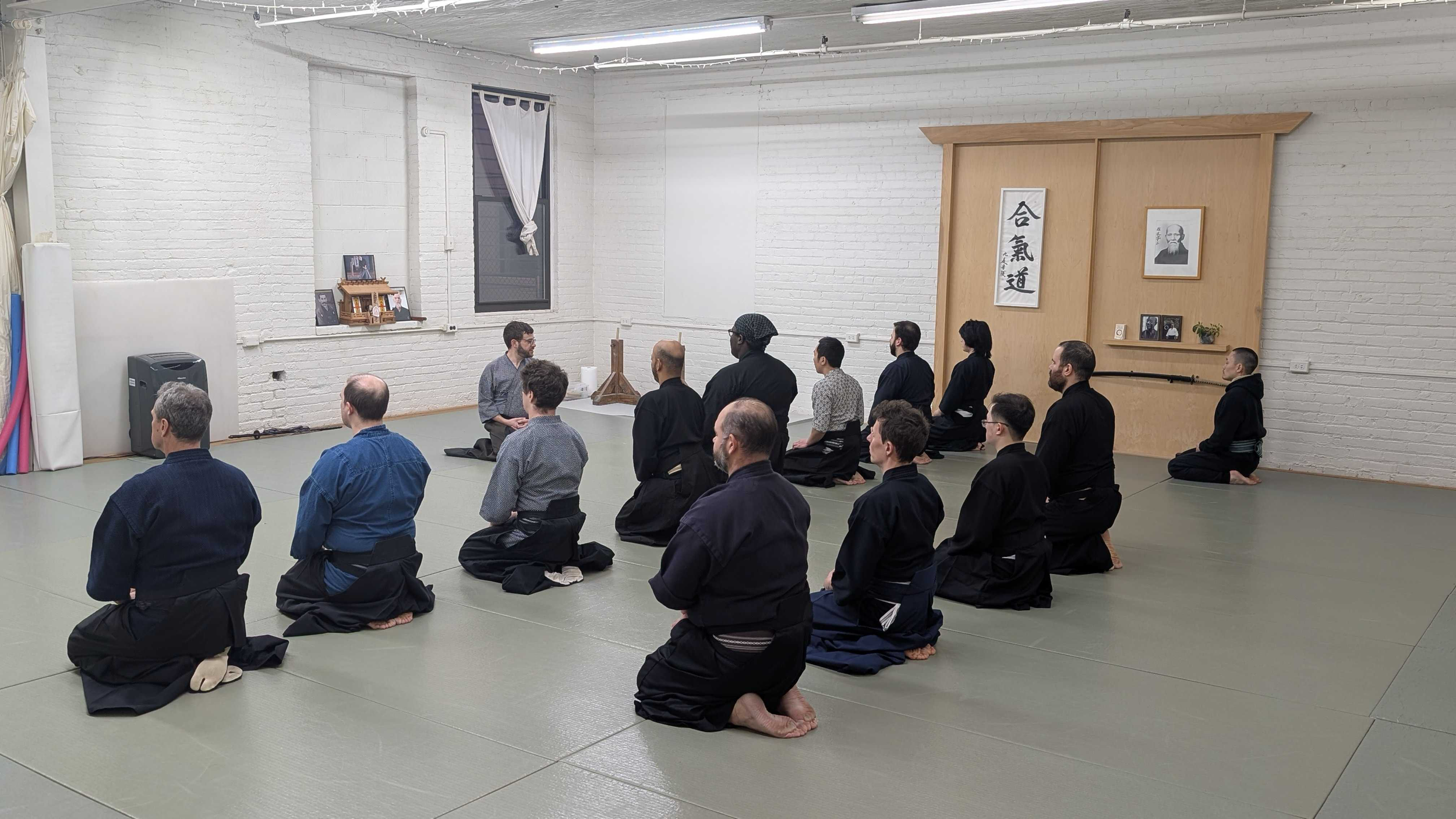
A question that’s often asked by new students is, “how often should I practice?”
I’ve studied martial arts on and off since I was a teenager, and no matter what art I was studying, I faced this question.
You can pursue Japanese sword arts much like a sports hobby such as darts or archery, but sword arts can end up being more complex due to their cultural and combative roots. This complexity inspires numerous reasons to study them, but how much one needs to practice depends upon the answer to one central question and a few follow up ones.
The central question we each need to first ask ourselves is: why are we practicing Japanese sword arts? The following questions will help answer that first one:
Is this something you’ve always been curious about?
Do you study battodo to become more physically coordinated?
To become more physically fit?
Or to release stress?
There are certainly additional questions one could ask, but let’s review these four and some possible answers.
Is this something you’ve always been curious about? Battodo is one of the more complex hobbies you can study. It’s as intellectually challenging as it is physically demanding, and it’s important not to ignore the emotional and psychological aspects of studying a killing art, even an antiquated one. There’s also the art and technology of the swords themselves; the philosophy and terminology of budo; a dense history of the ancient samurai and the amazing culture of Japan to explore. There are numerous styles to study but even within one ryuha, there are many different techniques and applications. Using Toyama-ryu as an example, there are eight kata which contain multiple kamae, cuts, and other techniques like parries and thrusts. Then there are many applications of kata including embu, tameshigiri, and gekken. This all leads to a rich study with a lot to learn and to master — certainly enough for a lifetime.
Is this a way to become more physically coordinated? Sword arts require a high degree of skill — a combination of both physical coordination, proprioception, deep body awareness, and internal physical connectivity. Physical coordination (especially of the limbs and joints) is only learned through repetitive practice with proper guidance. If you practice with proper guidance and a sensei’s oversight, you will develop better coordination. The sword is a unique training tool and internal physical connectivity is something you learn in battodo by connecting the body with the sword. Only you and your body can develop this. Our tanren class can help, and a teacher can point the way, but this is something again that can only be developed through persistent, repetitive practice.
Is this a way to become more physically fit? Depending on the skills being practiced and your overall level of fitness, battodo can be physically challenging, but for the most part what we do in class isn’t a strength or cardio fitness activity in the typical sense. One can practice battodo throughout their entire life because it doesn’t require a high degree of brute physical strength, nor does proper place damaging stress on the joints. That said, using the sword properly does require strength and flexibility of a certain kind.
“In the context of learning a physical art, tanren refers not so much to the acquisition of skills as to the transformation of structure.”
Our curriculum is focused on developing the tanden and dissolving the physical and mental blockages that prevent efficient use of the body in coordination with the tanden. For this reason, we teach the tanren curriculum of Kurikara Ryu Heiho. If you can’t take the tanren class, then we recommend a combination of yoga and calisthenics. The yoga must be rigorous, and the calisthenics focused on building functional strength and flexibility — not bulking up. While an exercise like shikko (knee walking) or our sparring practice will get your heart rate up, we also recommend that you do something every week to specifically address cardio needs. Any activity that gets your heart working harder is good, be that fast walking, dance, running, skating, bike riding or any similar activity.
Is this a way to release stress? I can only speak for myself, but no matter how bad my day is, I feel better after a sword class. Sword training is a way to take myself out of all the bothersome issues of daily life, and at the same time triggers enough endorphins to improve my mood. The late Otani Yoshiteru, one of the progenitors of battodo in America, borrowed the term ‘moving zen’ from karate to describe battodo practice. On this basis alone I wish I could train six days a week.
There’s one more thing to factor in, which is expressed in a Japanese saying, “hyakuren jitoku” (百錬自得), which roughly translates to, “constant training forges self-development.” This is about something other than improving one’s sword technique. This is the metaphor of tanren, of a swordsmith forging impure iron into a sharp, resilient blade through thousands of repeated strikes with a hammer. A more revealing translation of the phrase is perhaps “the true self emerges after ten thousand repetitions.” So, like most Japanese martial arts, other goals of battodo training are self-development and self-mastery.
“Only though heaping training upon training and practice upon practice, polishing one’s skills and training one’s mind until one achieves a mental attitude of unflinching determination no matter the odds will the life-taking sword become the life-giving sword and the proper attitude of reverence and respect toward the Japanese sword emerge.”
Given that sword fighting is probably the anachronistic martial art there is, it nevertheless provides a number of skills and insights that are useful in life for those who train with the proper attitude. Maybe that isn’t cutting a rolled tatami mat at a 45° angle, but it certainly can be maintaining composure while under pressure. Spreading awareness. Cultivating emotional sensitivity and control. The battodo curriculum, grading process, and public demonstrations can inform how we handle stress in everyday life. That’s just one example of how training can develop self-mastery.
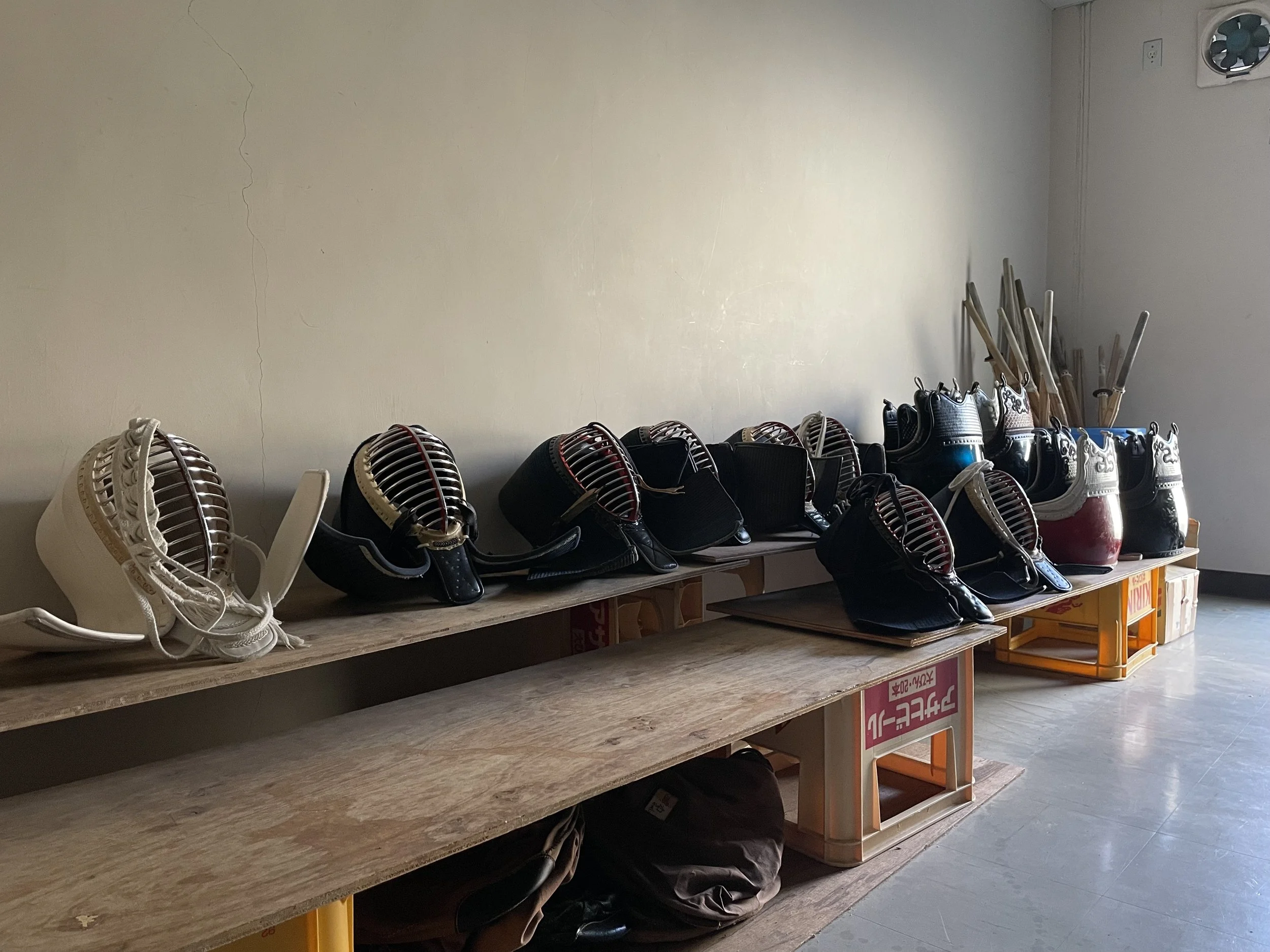
How much time you allot to a hobby is based on how much enjoyment and fulfillment you get out of it; how challenging it is, and how much mastery you hope to achieve. If you enjoy battodo and you want to be more physically skillful; want to be in better physical shape; want the hit of dopamine that training provides; want to take a deeper dive into Japanese culture; and want to develop self-mastery, then the answer is you should train as much as you can.
There are caveats, naturally. We all live in the modern world and have lives outside of the dojo. How much we should practice is sometimes framed by “how much can I practice?” Life has a way of throwing impediments into our planned schedules, be they a demanding job, a packed academic schedule, or family commitments. Also, there’s a limit to what our bodies can deliver, and your body will tell you when you’ve taken it to the edge.
I’ve studied sword arts for almost 15 years and taken battodo classes at least twice weekly for the last 10. What I’ve learned is that the only way to learn this art is to practice. Anything else is fantasy. The only way to maintain one's ability is to practice. The alternative is delusion. The only way to improve is to practice. There are no short cuts.
How often should you practice? As often as you can.
