By Anthony Deen
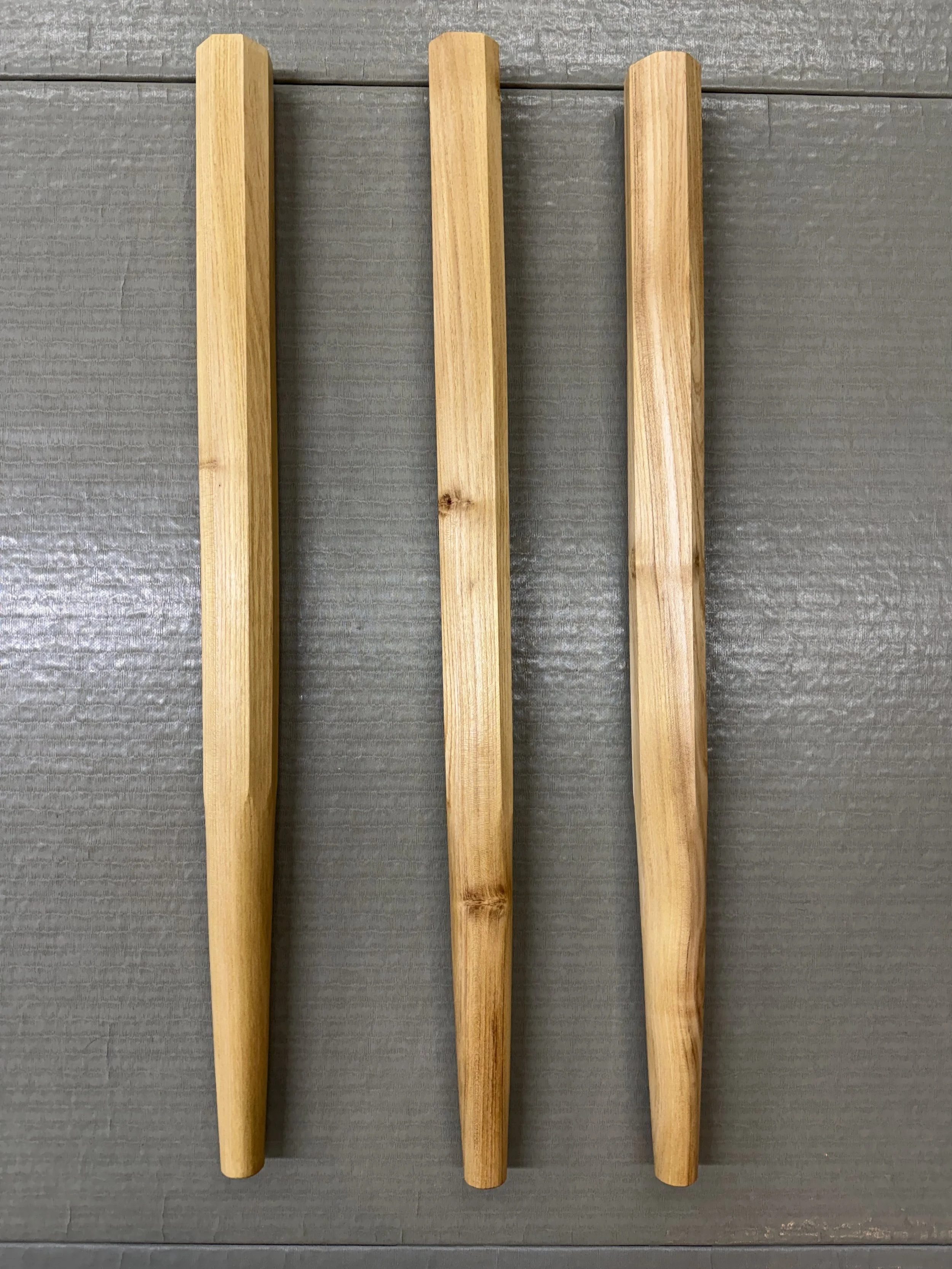
Our dojo is unique in that we offer a dedicated Tanren class. Tanren (鍛錬) is a Japanese word that literally means "forging," or "tempering," and signifies rigorous training of the body, mind, technique, and spirit. As a tosho (swordsmith) removes impurities and builds strength in raw iron with intense fire, hammering, and water quenching, Tanren applies the same transformative principles to a practitioner's body, mind, and technique.
From the outside, Tanren can seem both esoteric and even arbitrary. For example, what does breathing through your mouth as opposed to your nose have to do with sword fighting? For those of you who are curious about this but unsure of why and what it is, I have some thoughts to share from my limited experience with it. I’ve only observed Tanren practice, watched some videos and attended workshops, but I’m hopeful that my limited experience may provide some insight. As a disclaimer, this article is based solely on my own observations and research and isn’t the product of either Shane sensei’s or Evan sensei’s work. Also, I won’t be going into more advanced aspects of the subject.
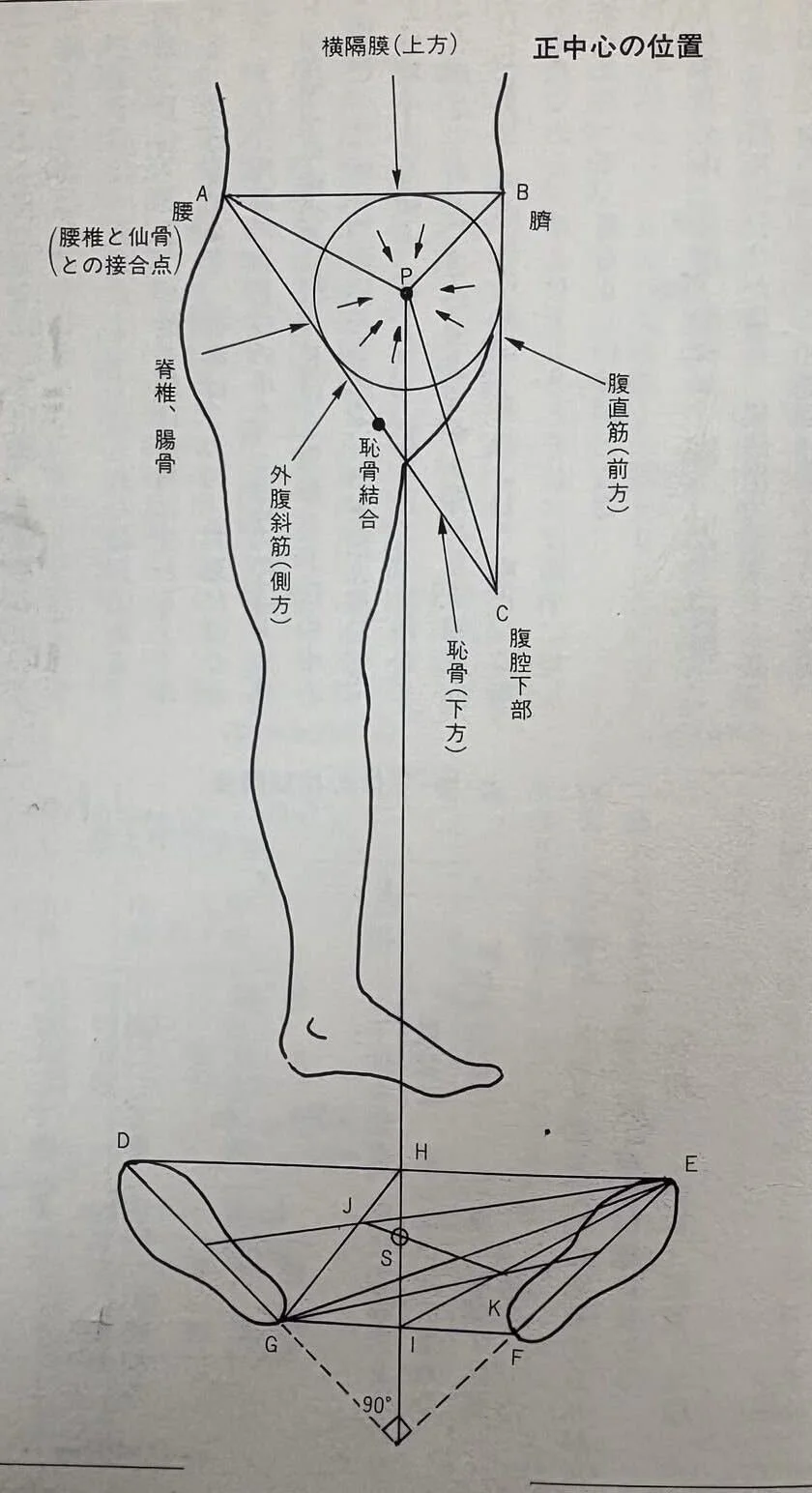
At first, much of Tanren seems focused on the development of the tanden (丹田). That is specifically the Seika Tanden, or Xia Dantian (in Chinese), and is also referred to in Japanese martial arts as the hara, and in yoga, Svadhishthana, the Sacral Chakra. It’s deep inside your body approximately three fingers below your navel and is your center of gravity. This area is known in the West as the “muscular box” as it’s composed of four major muscle groups: the abdominals, the spinal stabilizers, the diaphragm, and the hip girdle. As you can imagine, this is an incredibly important part of your body as it connects the core muscles responsible for standing erect, filling the lower portion of the lungs, and literally all locomotion. In traditional Asian martial arts it’s also thought of as a reservoir of ki or chi, life energy.
The reason we focus on this specific part of the body in sword study is because all energy in swinging the sword should be initiated and generated from the ground up through the legs and tanden. In Asian martial arts, strength comes from the lower body into your forearms and hands, bypassing shoulder and upper arm strength. If you develop this ability enough it replaces your upper-body strength with the greater power from your lower body, and the solidity of the ground. You can then project power from the ground and lower body into your forearms, hands and ultimately your sword. Overall control of the body will be from movement of the tanden. This is one of the hardest things in Japanese martial arts to develop. Please appreciate that having a strong “core” won’t automatically make you a great swords-person, but it will provide the physical foundation for your practice.
“The strength derived from Tanden is not a mechanical, physical force. It is a force interwoven with ‘life’, ‘the light’ and ‘the way’. It is strong and yet flexible. It is heavy, and at the same time light. It is brilliant and yet subdued... This strength is no other than the ultimate unity of all forces.
This is the force of Hara (the lower abdomen) and Koshi (the loins) unified, which arises out of perfect posture. One cannot attain this state of physical enlightenment with a clouded mind. On the contrary, when this force is born, every function of thought stands still. The spiritual process instantaneously ceases. It is ‘clarity’, ‘serenity’ and ‘harmonious beauty’…”
Many schools of Japanese swordsmanship and empty handed arts devote aspects of their curriculum to training the tanden. In many sword systems including Muso Shinden-ryu, Muso Jikiden Eishen-ryu and ZNKR seitei iaido, beginners are made to do a year or more of Omori-ryu in which many kata are initiated from seiza and tate hiza to build the muscles in this area. In kendo, students are made to do a number of exercises including hopping from a crouched position. In Aikido, the hara is trained through an ancient Shinto exercise, Ame no Torifune – known today as Funekogi Undo (rowing exercise) followed by Furitama, (shaking the soul). There are also aikido techniques from seiza involving shikko (knee walking) known as suwari waza, which force engagement of the transversus abdominis and multifidus muscles to stabilize the pelvis and spine without collapsing forward or leaning on the arms. Aikido also contains a tanden driven breathing exercise called kokyu-ho. Similar core muscle development is also a goal of pilates and popular yoga.

This noted, Zentokan’s curriculum and the Kurikara Ryu are designed to do more than just develop the tanden. As with advanced internal aspects of many martial arts, Tanren is based on much more comprehensive and archaic yogic practices. Yoga was first written about in a 3,500 year old text, the Rig Veda. Recent archeological finds in the Indus Valley suggest that the ideas in the Veda may predate written language. The word Yoga comes from the Sanskrit Yug, one of its meanings is “to unite.” The implication is that the aspirations of this practice is to do more than develop one specific area of the body, and rather to strengthen and unite numerous systems in the body. This expansive goal traveled from India to China and then Japan and informs much of Traditional Chinese Medicine (TCM). Importantly, the validity of these yogic and TCM practices have recently been verified by Western science.
So what are the other systems in the body that benefit from Tanren? To understand this, we have to explore the Sanjiao-Mocou system, or as it’s referred to in the West, the extracellular fluid circulatory network and fascial-interstitial network. This is a complex that surrounds, supports, and gives structure to the cells and tissues of our bodies.
The Interstitium
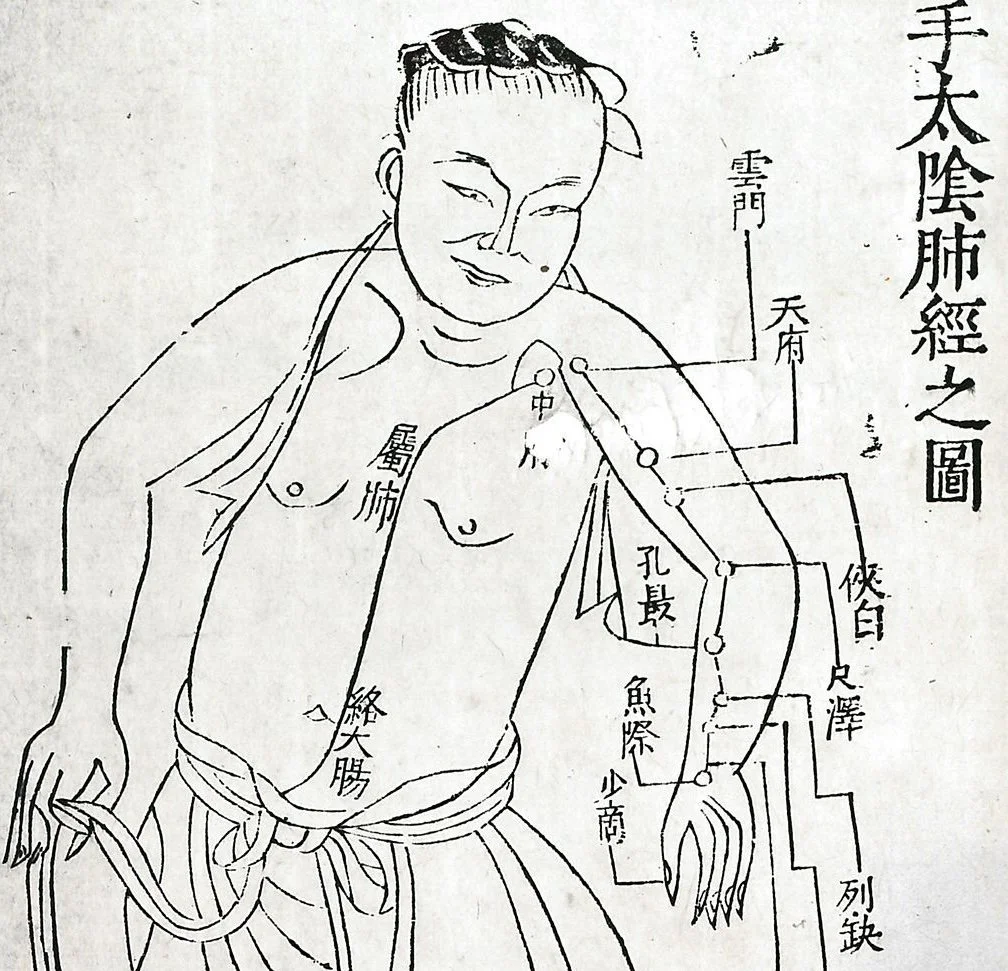
The Interstitium is a body-wide, continuous network of fluid-filled spaces situated between cells, tissues, and internal organs. It also corresponds to acupuncture meridians and to acupuncture points. It was first correlated by Western science in 2002, but not fully described until 2018 by Dr. David Carr-Locke and Dr. Petros Benias.
The Interstitium contains the Extra Cellular Matrix or ECM, the external "scaffolding" that holds multicellular tissues together rather. The Interstitium and the ECM can be supported by a range of myofascial release techniques like those in Tanren. It’s the target of many exercises in yoga, QiGong, Kung Fu and TCM including acupuncture, acupressure, massage, and stretching.
The Fascial system
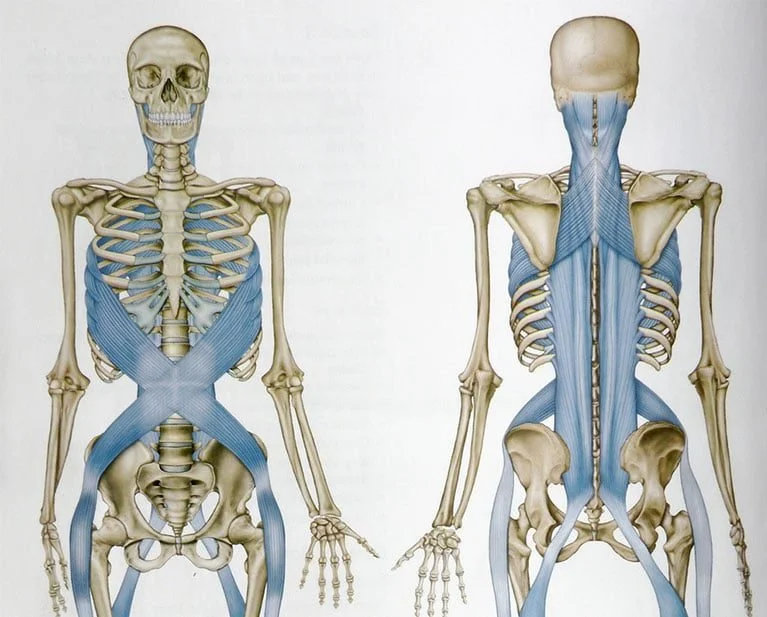
Part of the ECM, the fascia is a continuous, three-dimensional web of fibrous connective tissue made of collagen, elastin, and a very dynamic fluid, hyaluronan. It wraps around, supports, and separates every muscle, bone, joint, nerve, blood vessel, and organ in the body. Knowledge of it has a long history in ancient Greece, Rome, Persia, India and TCM, but was only defined as a comprehensive system in Western medicine in 2014 by Dr. Carla Stecco and her team. The fascial system is exercised and supported by yogic stretching as well as rapidly forcing and then stabilizing the muscles in activities like dancing, hopping, and bouncing.
The Lymphatic system
Among other functions, the lymphatic system is responsible for the movement of white blood cells for immune defense, and also absorbs dietary fats from the small intestine, delivering them into the bloodstream for use as fuel to produce energy. The lymphatic system has been known about in the West since 1,500 BC and was written about comprehensively as early as the 1650s. It wasn’t until 2015 that Dr. Kari Alitalo determined how it connected to the rest of our body’s systems. The lymphatic system relies on physical movement, muscle contractions, and deep breathing to help circulate fluid and filter out waste.
The Ventral Vagus Nerve and the Parasympathetic Nervous System
One of the most important things that Tanren can provide to our bodies is support for the Vagus nerve and the autonomic nervous system. The vagus nerve is the longest cranial nerve, acting as the primary bi-directional bridge between your brain and major internal organs like the heart, lungs, and gut. These are non-conscious areas of our brains that control our fundamental life supporting functions. The Vagus nerve has been known since at least the 2nd century CE, but it wasn’t until the 1990s that Dr. Kevin J. Tracey and his team researched and reported on its full functionality and importance.
Extensive research has been done on the subject and there’s a wealth of information on the correlation of yogic breathing exercises on the body, mind, and the parasympathetic nervous system in particular. This system is exercised by seemingly strange activities like manipulating the position of the tongue during breathing; by breathing exercises; by rapidly manipulating body temperature (cold water); by swallowing, gargling, humming, singing and chanting, and along with a host of other activities, and by general exercise.
Dr. Michael Melnychuk did research at Trinity College Dublin which provided new scientific understanding of the neurophysiological mechanisms underlying many ancient yogic practices. Specifically in regard to breathing exercises and brain activity. “Practitioners of yoga have claimed for some 2,500 years that respiration influences the mind. In our study we looked for a neurophysiological link that could help explain these claims by measuring breathing, reaction time, and brain activity in a small area in the brainstem called the locus coeruleus, where noradrenaline is made.Noradrenaline is an all-purpose action system in the brain. When we are stressed we produce too much noradrenaline and we can’t focus. When we feel sluggish, we produce too little and again, we can’t focus. There is a sweet spot of noradrenaline in which our emotions, thinking and memory are much clearer.”
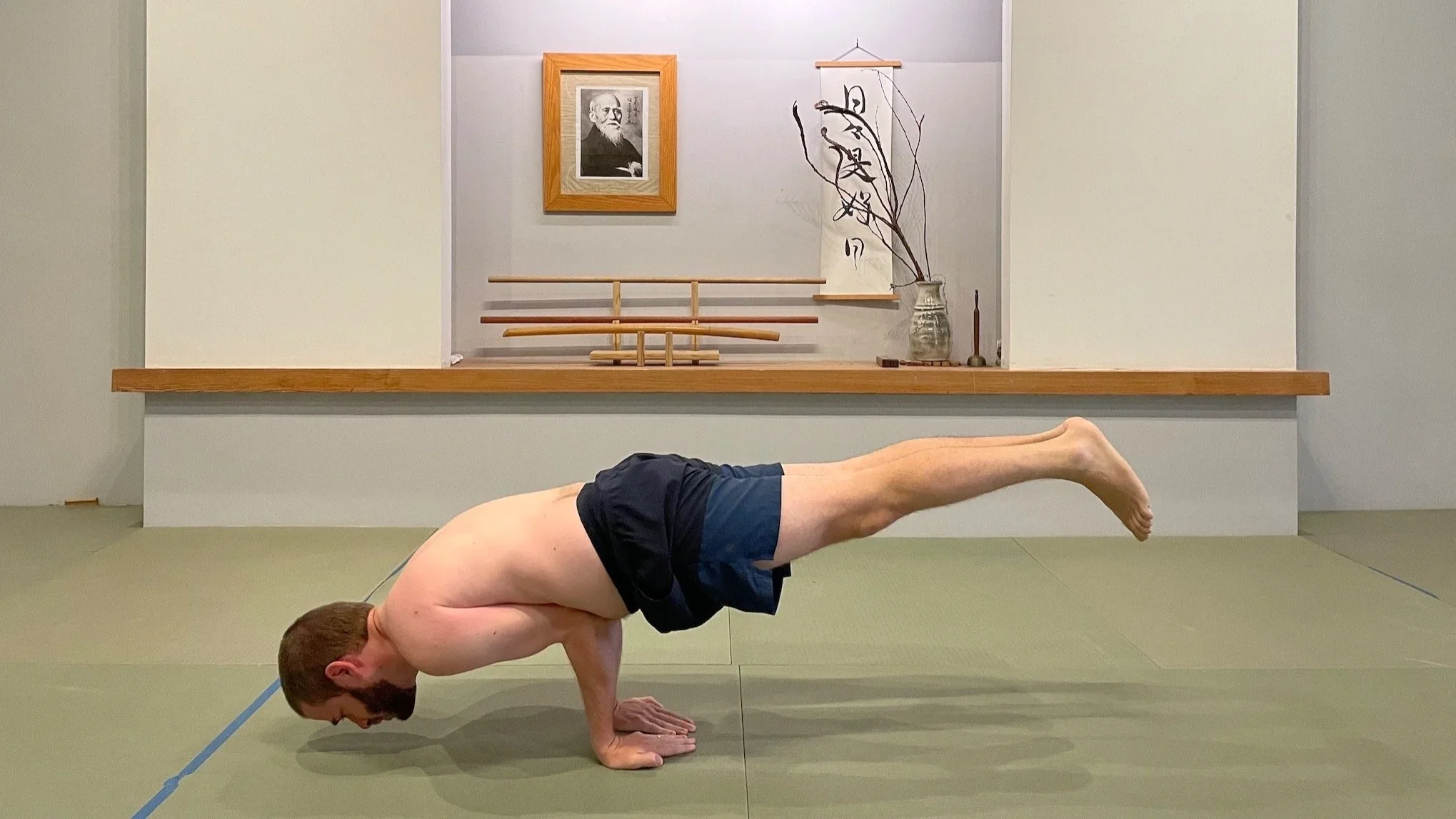
There’s much more to Tanren than I’ve written about here. This practice weaves together our physical health, our psychological health, down to seemingly disparate things like our gut-biome. What’s important to understand is that many of the crucial and primary physiological systems are supported by systematic training in Tanren. If you’re interested in experiencing these activities, we have Shane sensei’s classes so you have the opportunity to experience it personally by attending the Tanren class.
As a new student, this study provides not only wider benefits but the fastest way to build the foundation needed to engage in swordsmanship. As the oldest member of our dojo, my experience is that the benefits of this kind of study pay dividends that are necessary as you get older. The idea of a healthspan in addition to lifespan is especially prescient today when both have been going down here in the United States. We want to do whatever we can to extend our healthspan. As the Tanren class has been optimized for Japanese sword practitioners, students of Shane sensei’s class receive a double benefit.
If you’re interested in learning more about the correlation of TCM and Yogic practices with Western science, I recommend two white papers:
“The fascial-interstitial system and the sanjiao-mocou system: an analogy-based hypothesis for the anatomical basis of meridian pathways”
https://pmc.ncbi.nlm.nih.gov/articles/PMC13066272/“Pranayamas and Their Neurophysiological Effects”
https://pmc.ncbi.nlm.nih.gov/articles/PMC7735501/
