What can swordsmanship do for you?
By Michael Shane
“[W]hen wielding a sword, you must let go of your will but hold on to the depth of your mind.”
In traditional Japanese martial arts, teachers often mention omote (表) and ura (裏), which can mean outside and inside, or front and back, respectively. Often this distinction is literal. For example, in the context of Japanese swords (nihonto / 日本刀), omote and ura can refer to the two sides of the nakago (tang) relative to how the sword is worn. Swords are always signed on the omote side, which faces outward; the ura side faces inward, against the body of the wearer. As with many important concepts in the dojo, there are additional philosophical and metaphorical layers for these words.
Omote can also refer to what is simply visible on the surface — the immediately accessible, obvious, and superficial. Ura points to what is hidden, to what lies beyond some metaphysical threshold, on the other side of deep and dedicated training.
So, with this framework in mind, what can swordsmanship do for you? The answer depends on how you choose to approach it.
For years I forged my spirit through the study of swordsmanship,
Confronting every challenge steadfastly.
The walls surrounding me suddenly crumbled;
Like pure dew reflecting the world in crystal clarity, total awakening has now come.
Using thought to analyze reality is illusion;
If preoccupied with victory and defeat all will be lost.
The secret of swordsmanship?
Lightning slashes the spring wind!— 電光影裏斬春風 —
— Yamaoka Tesshu, June, 1880
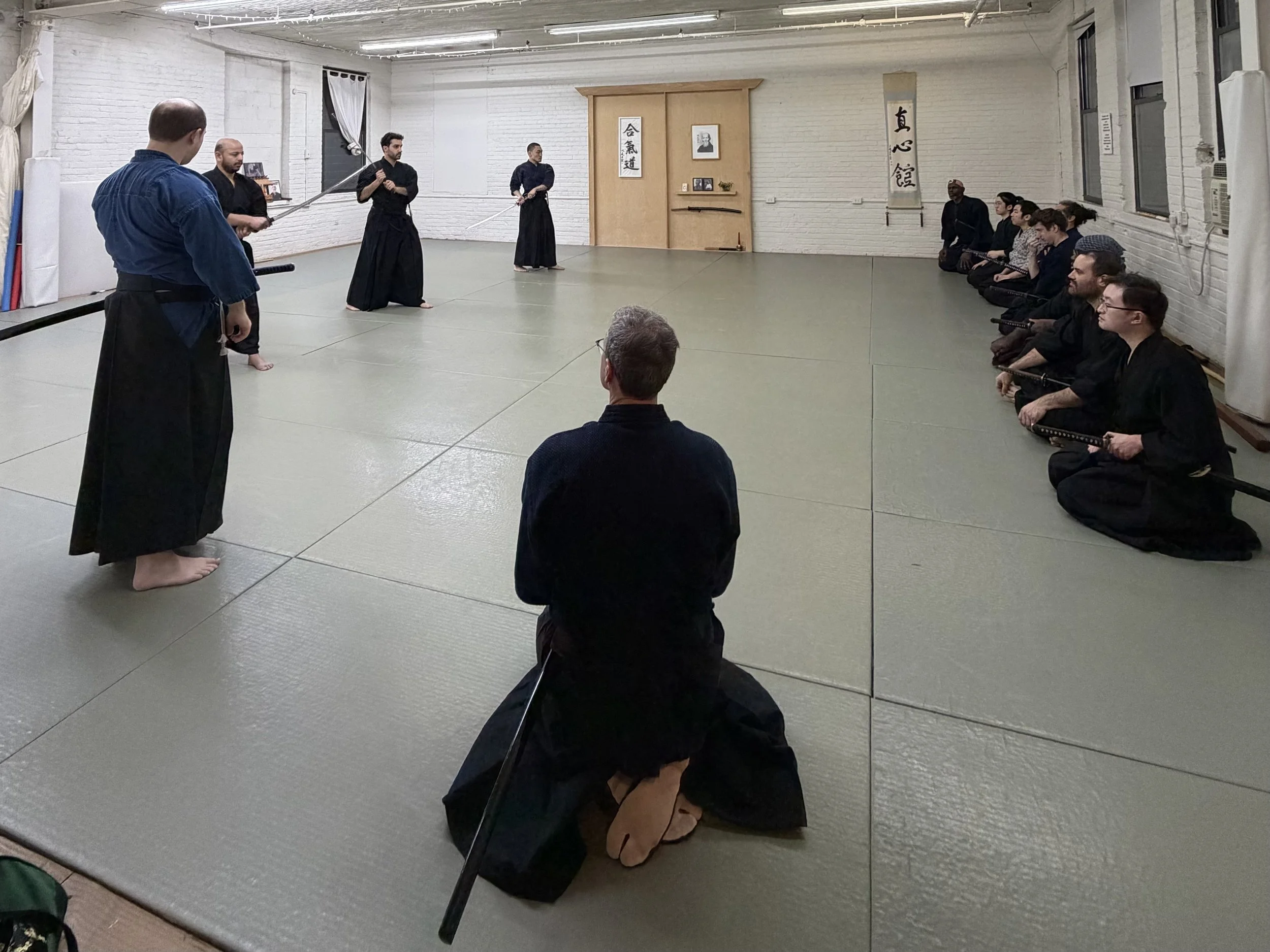
The omote offers many of the same benefits as modern sports. From a physiological point of view, learning to move dynamically with and transfer power into a two pound length of steel offers great benefits for the body. The basic curriculum at Zentokan Dojo will strengthen your legs, back, and grip. You will improve your balance by strengthening your core and increasing flexibility in major muscle groups, all of which will protect your joints. Working with a sword will also sharpen your focus and improve proprioception and hand-eye coordination. For many people looking to exercise their body and mind in a different sort of space, the dojo environment immediately resonates. Over time, all of these activities can change the way you physically approach the world outside of the dojo.
How you stand while riding the subway. The way you pick something up off the floor. How you use your legs when riding a bicycle or climbing the stairs. Breathing. The way you interact with the world around you starts to change, invisibly but deeply. And while the same could be said about any physical hobby — rock climbing, running, tennis — budo (武道) offers something else for those who are committed.
So what does it mean to go deeper — to the ura?
First, it’s important to say that ura does not necessarily mean better. This is not about magical techniques or classified information, which so often are wrappers for cults of personality, fantasy, and delusion. There is no gatekeeping at Zentokan, or at any legitimate dojo for that matter. Everything instructors have to offer is available to all who show a sincere desire to learn the art, preserve its curriculum, and contribute to the community.
In recreational sports, while sportsmanship is important, competitors are ultimately judged based on quantifiable outcomes as long as they follow the rules. Jim Furyk’s golf swing is legendary because it defies conventional wisdom about how to use a golf club to impart energy into a ball and send it on a chosen trajectory. Despite Furyk’s success on the PGA Tour, no one teaches golfers to swing a club like he did. But it didn’t matter how Furyk swung as long as he got the ball in the hole in fewer strokes than the other players. Budo is different.
We believe that how you achieve something is at least as important, if not more important, than what you achieve on the surface. For example, we learn to cut tatami targets in tameshigiri at specific angles and in prescribed patterns in order to demonstrate technical mastery. But the angle of the cut is just one small part of what should be a holistic martial practice. If the student has to rely on distortions in other areas (grip, posture, stance, safety, martial efficacy, etiquette, or mindset) in order to achieve the cuts, then the exercise is a failure no matter what the mat looks like. There are no holes-in-one in budo because budo is a path. That’s the meaning of the “-do” suffix (道) shared among battodo, aikido, judo, kyudo, iaido, kendo, and so on; and it’s why no budo can be legitimately transmitted via books or videos alone.
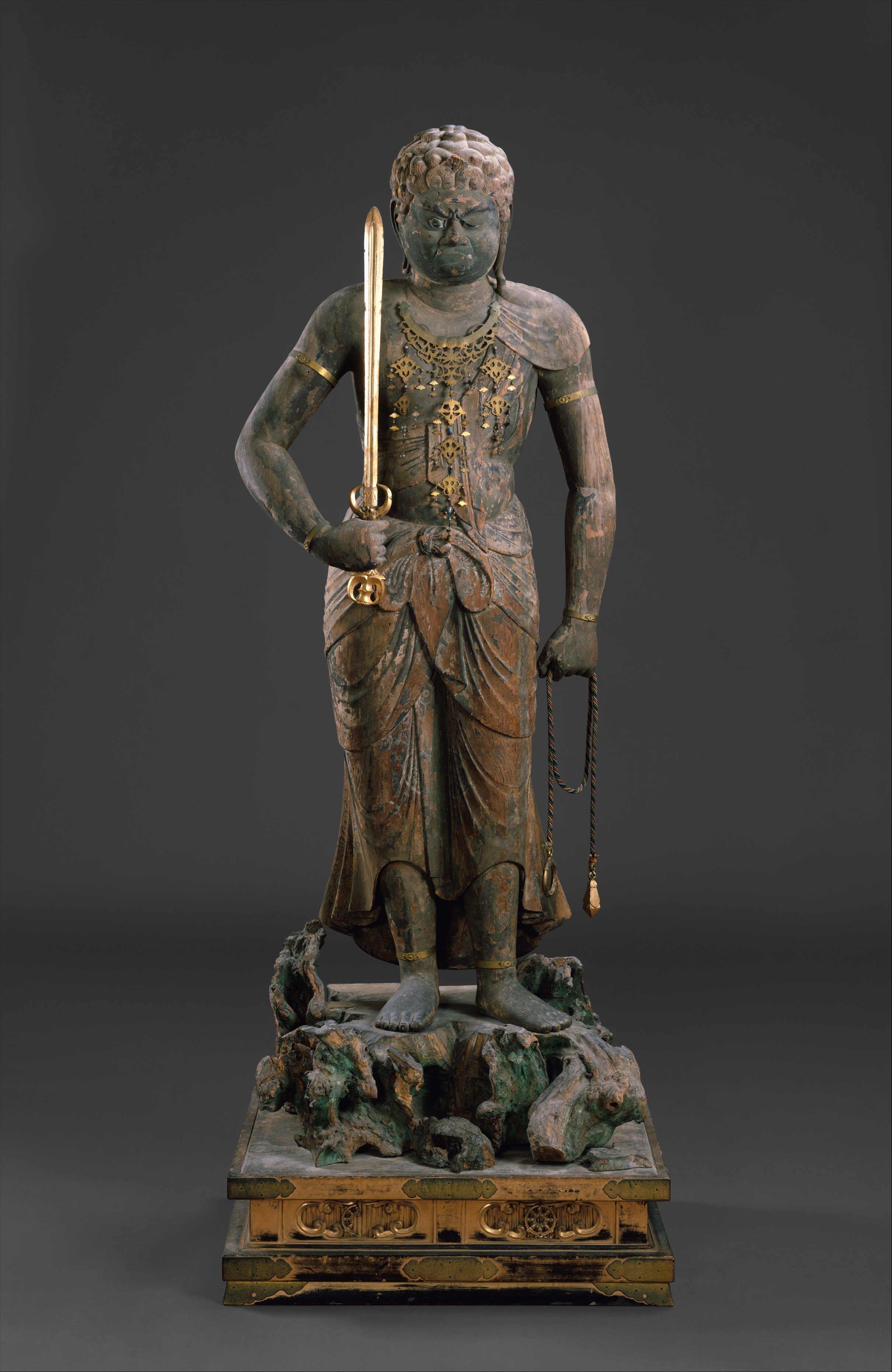
Our curriculum is more than a syllabus for elucidating the techniques of swordsmanship or demonstrating impressive tricks. It is a map for changing the human being holding the sword. While Toyama Ryu is known for its practicality as a system of fencing, we do not allow its realism to overshadow a deeper set of values. Nakamura sensei wrote, “We no longer live in an age in which the primary objective of the martial arts is to cut people down, but budo differs from other sports in that it aims to conquer concerns about mortality and is a pursuit to be trained and studied throughout one’s life.”
That’s not to say one can’t learn transformative life lessons at the golf course or the basketball court or on a hike in Yosemite. But the anachronistic nature of the dojo and its rituals, culture, and etiquette uniquely separate it from daily life; from the screens, the scrolling, the notifications and scoreboards that hijack the rhythm of our minds and our emotions.
The ura then contains the potential for what can happen when one’s training is deep enough, rigorous enough, and consistent enough to change the mind. At Zentokan we believe this process is only achievable through training the body under the right guidance. Put another way:
You cannot change the mind with the mind.
The celebrated kendoka Morita Monjuro expressed as much when he lamented that although he had “practiced Zen intensively for years, thinking of life and death… [none] of these practices was of any use … at all in kendo.” In Kendo Based on the Koshi and Tanden he wrote that “[t]hrough the force of the tanden, we can achieve a wholeness or integration of the mind on the basis of which it is possible to ‘let it go.’” In both the body and the mind, wielding a Japanese sword demands that we learn to separate things that at first seem stubbornly connected, and to unify things that seem at odds. How do we put fullness into the lower arms without tension in the shoulders and chest? How do we “put force in the tanden” and “move from the center”? And how do we achieve “wholeness or integration of the mind” while also letting it go?
“Only through heaping training upon training and practice upon practice, polishing one’s skill, and conditioning one’s mind until one achieves a mental attitude of unflinching determination no matter the odds will the life-taking sword become the life-giving sword and the proper attitude of reverence and respect toward the Japanese sword emerge.”
In the dojo, we repeatedly place ourselves into simulations at the edge between life and death. The tanren also directly stimulates the sympathetic nervous system, gradually changing the way one physically and emotionally navigates all kinds of stressors. It is through these physical experiences, week in and week out, that the mind gradually learns to “let go”.
In the early days of training, progress can resemble collecting — skills, ideas, corrections, trinkets. Over time, deeper attainment in the art usually feels more like a release, or spontaneously dissolving a longstanding blockage. That’s where we can find the ura. Not in the acquisition of special techniques or the accumulation of victories, trivia, or ranks, but via a different way of moving through the world, cultivated through sincere and long term training in the dojo.
